How Corrugated Cardboard Is Made: From Kraft Paper to Finished Box
Quick answer: Corrugated cardboard is made by feeding kraft paper reels into a corrugator, where one sheet (the fluting medium) is shaped into a wavy pattern and glued with starch adhesive between flat sheets of linerboard. This creates corrugated board, which is then printed, cut, creased, and slotted (converting) before being folded and glued into a finished box.
This is the first article in our series, "From Corrugated Board to a Profitable Box Manufacturing Business." Before looking at machinery, costs, or plant setup, it helps to understand the corrugated cardboard manufacturing process itself — the ten stages that turn a roll of brown paper into the box sitting on a shelf or truck. Let's start at the beginning.
Planning a corrugated box plant?
Boson Tera Pack builds complete corrugated production lines — from corrugators to printer-slotters to folder-gluers. Get a tailored line quote in 24 hours.
Request a Free Quote →Key Takeaways
- Kraft paper, made from wood pulp, is the base raw material for both the smooth liners and the wavy fluting layer.
- Fluting shapes paper into arches that give corrugated board its strength-to-weight ratio.
- Corrugation bonds fluting medium to linerboard using starch adhesive on a machine called a corrugator.
- Board comes in single-wall, double-wall, and triple-wall structures, and flutes come in standard profiles (A, B, C, E).
- After the board is made, it goes through printing and converting (creasing, slotting, die-cutting) before final folding and gluing into a finished box.
1. What Is Kraft Paper? (The Raw Material)
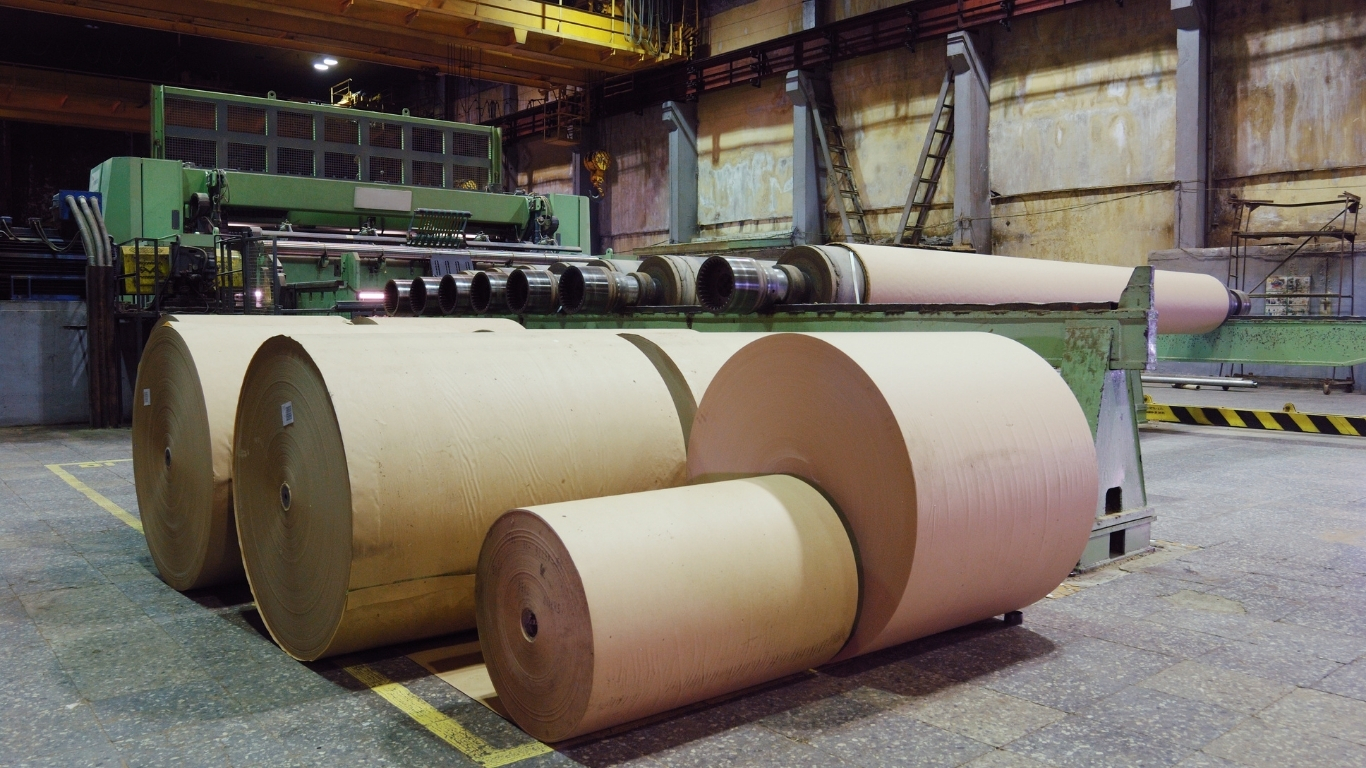
Kraft paper is a strong, brown paper made from wood pulp using the kraft (sulfate) chemical pulping process, which preserves long cellulose fibers for high tensile strength.
Kraft paper is produced from virgin wood pulp, recycled fiber, or a blend of both, and comes in different weights (measured in GSM — grams per square meter). It forms the two core components of corrugated board:
- Linerboard — the flat, smooth outer and inner layers
- Fluting medium — the wavy inner layer
2. What Are Paper Reels?
Paper reels are the large rolls of kraft paper — often weighing several tons and stretching for kilometers — that feed continuously into the corrugator at the start of production.
Reels of linerboard and fluting medium are mounted on reel stands and unwound into the line. Consistent reel tension, moisture control, and splicing (joining a new reel without stopping the machine) all directly affect the strength and quality of the finished board.
3. What Is Fluting?
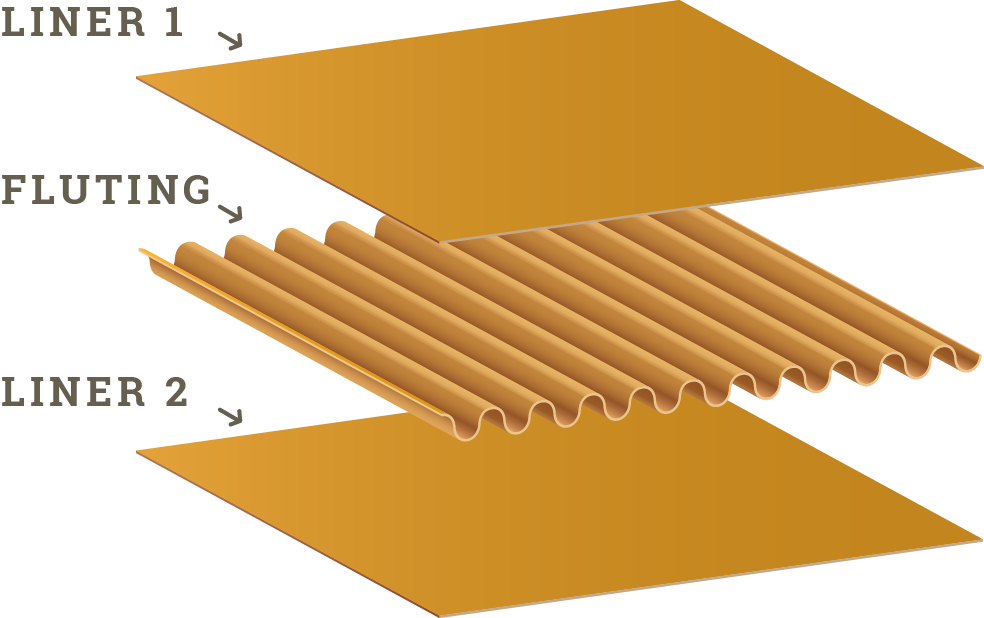
Fluting is the process of shaping flat paper into a wave-like pattern using heated, grooved rollers, creating the arched structure that gives corrugated cardboard its strength.
Steam and heat soften the paper fibers so they bend without cracking, and the shape sets as the paper cools. These arches act like small structural beams, resisting crushing forces from multiple directions — something flat paper alone cannot do.
Flute Profiles Compared
| Flute | Size | Best For |
|---|---|---|
| A-flute | Largest | Cushioning, stacking strength |
| B-flute | Small, dense | Puncture resistance, print clarity |
| C-flute | Medium | General shipping boxes (most common) |
| E-flute | Thinnest | Retail packaging, high-quality print surface |
4. What Is Linerboard?
Linerboard is the flat, smooth layer of kraft paper — usually heavier than the fluting medium — that forms the top and bottom surfaces of corrugated board.
A finished board typically has two liners: an inner liner facing the product, and an outer liner facing outward, which usually carries the printed branding.
5. What Is Corrugation? (Bonding the Layers)
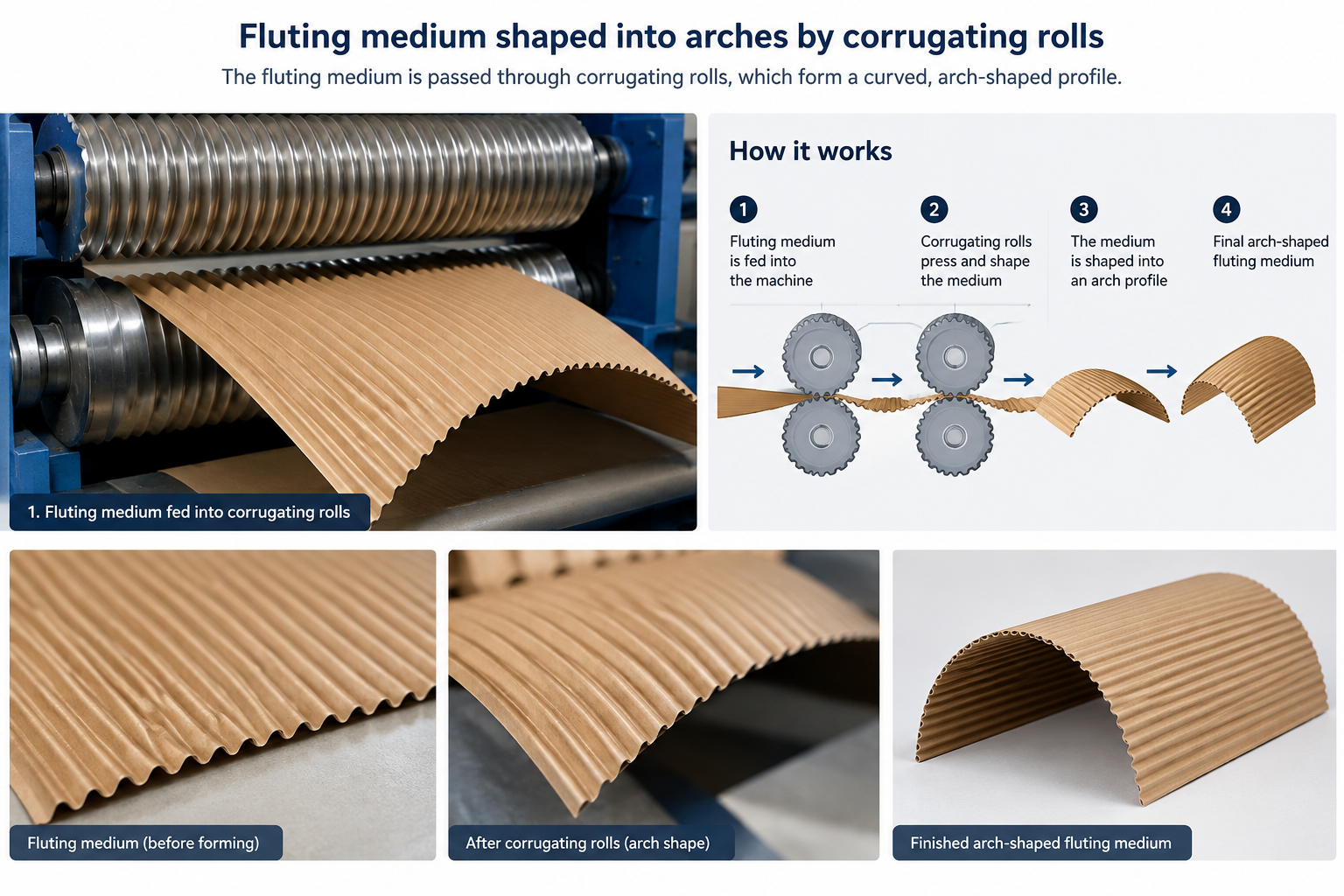
Corrugation is the process of joining fluted medium and linerboard into a single board, using starch-based adhesive and heat on a machine called a corrugator.
The general sequence on a corrugator:
- The fluting medium is shaped by corrugating rolls.
- Starch adhesive is applied to the tips of the flutes.
- A single-face liner is bonded to the fluted medium.
- A second liner is glued to the opposite side to form double-faced board.
- Heat cures the adhesive, locking the structure in place.
Starch adhesive is used because it's low-cost, food-safe, water-based, and bonds quickly under heat — a detail that matters later when evaluating corrugator speed and Overall Equipment Effectiveness (OEE).
💡 Pro Tip: The Corrugator Is the Heart of the Plant
The corrugator sets the speed and quality ceiling for your entire box plant. Our 3/5/7 Ply Corrugated Cardboard Production Lines are engineered for consistent bonding, precise flute formation, and high OEE. Talk to our engineers →
6. Single-Wall vs Double-Wall vs Triple-Wall Board
| Structure | Layers | Typical Use |
|---|---|---|
| Single-wall | 2 liners, 1 fluting layer | Standard shipping cartons |
| Double-wall | 3 liners, 2 fluting layers | Heavier products, export, long-distance shipping |
| Triple-wall | 4 liners, 3 fluting layers | Industrial packaging, appliances, bulk bins |
The right structure depends on product weight, fragility, and how far and roughly it will be shipped.
7. What Is Corrugated Board?
Corrugated board is the continuous bonded sheet that comes off the corrugator once the liner and fluting layers are cured together — it's then cut into large flat sheets for the next stage of production.
At this point, sheets are typically checked for warping, delamination (layers separating), moisture, and flatness before moving forward.
8. Printing on Corrugated Board

Printing adds branding, product information, and barcodes to the board before it becomes a box. Most corrugated printing uses flexography — flexible rubber or polymer plates with fast-drying, water-based ink suited to paper's absorbent surface.
Flexo printing is usually done inline on a flexo printer-slotter, the same machine that also cuts, creases, and slots the board in one pass.
Print, slot, and die-cut in one pass
Our flexo printer slotter die cutters combine 1–4 color flexo printing with slotting and rotary die-cutting — eliminating a separate printing stage.
Explore Flexo Printer Slotters →9. What Is Converting?
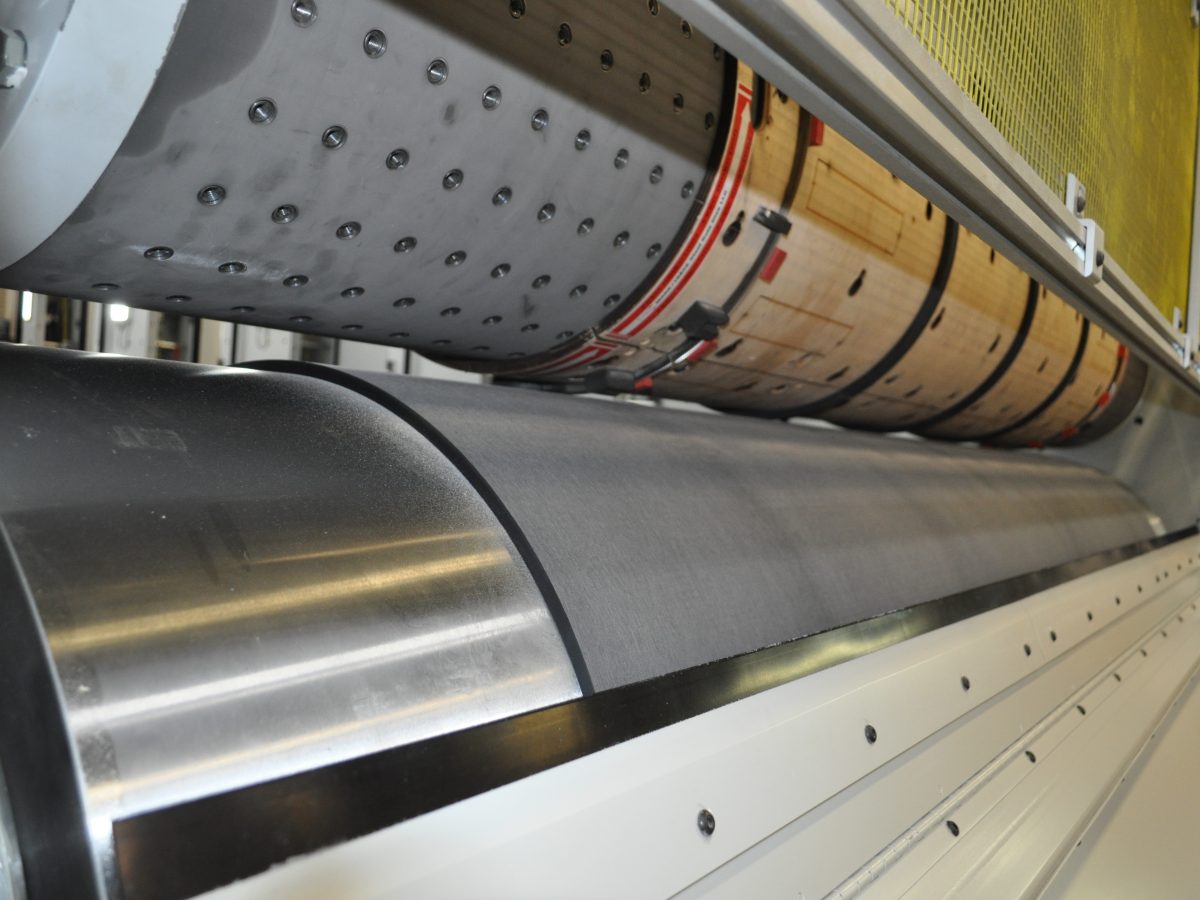
Converting is the set of processes that shape flat, printed corrugated board into a box blank — including creasing, slotting, die-cutting, and slitting.
- Creasing/scoring — indenting fold lines without cutting through the liner
- Slotting — cutting slots so flaps fold and interlock correctly
- Die-cutting — custom shapes for trays, displays, or non-standard boxes
- Slitting — cutting the sheet into individual box-blank widths
Precision here determines whether the box folds and glues correctly later.
10. The Finished Box
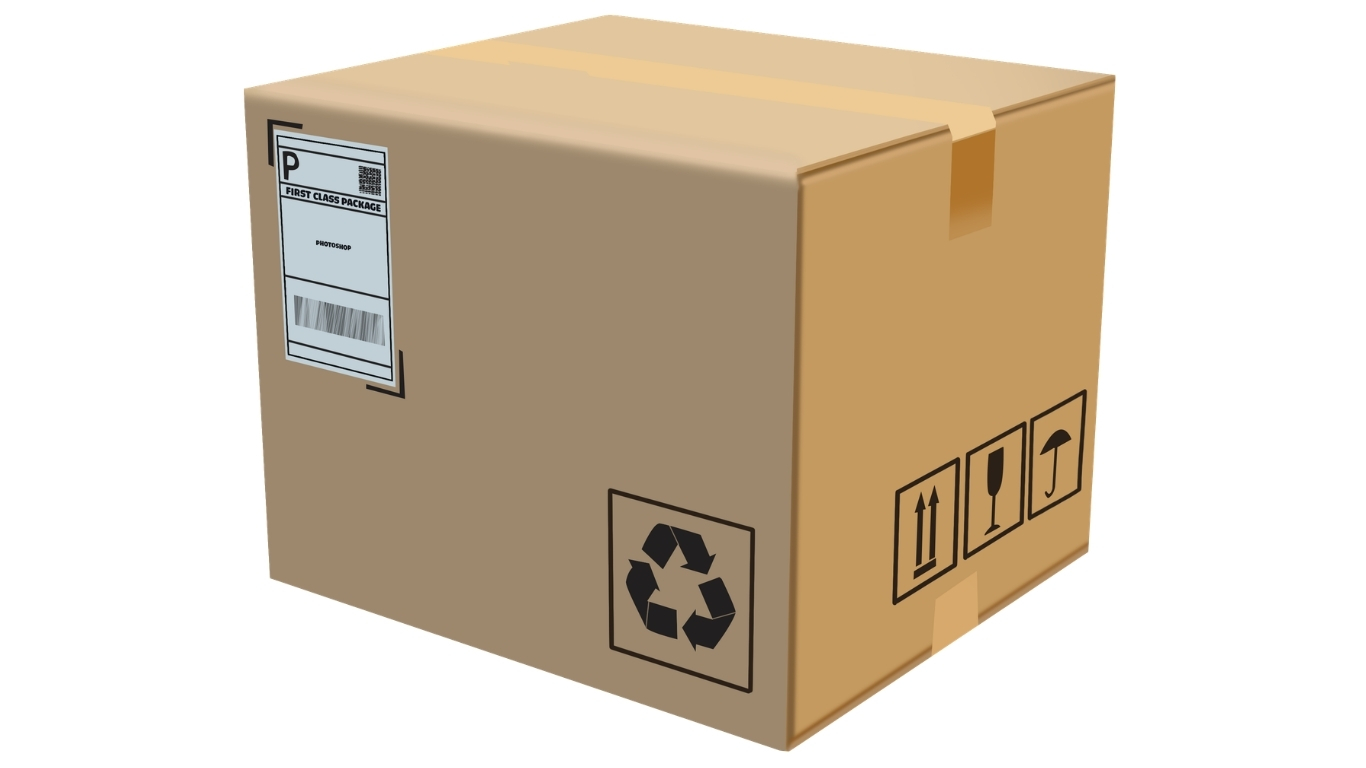
The last stage folds the converted blank and glues (or stitches) it along the manufacturer's joint. Most finished boxes leave the plant flat-packed and are popped into shape later by the end user, then bundled, strapped, and palletized for delivery.
Ready to build your corrugated box plant?
From corrugator to printer-slotter to folder-gluer — we supply the complete production line. Get a tailored quote in 24 hours.
FAQ: Corrugated Cardboard Manufacturing
What is the corrugated cardboard manufacturing process, in order?
Kraft paper reels → fluting → corrugation (bonding with starch adhesive) → corrugated board → printing → converting (creasing, slotting, die-cutting) → finished box.
What is the difference between corrugated board and cardboard?
"Cardboard" is a general term often used loosely for any stiff paper-based material, including single-layer paperboard. "Corrugated board" specifically refers to a fluted layer bonded between one or two liners, which is technically distinct and stronger than flat paperboard.
What machine makes corrugated board?
A corrugator — a long production line that shapes the fluting medium and bonds it to linerboard with starch adhesive in a single continuous process.
What is the strongest type of corrugated board?
Triple-wall board, with four liners and three fluting layers, offers the highest strength and is used for heavy industrial packaging.
Which flute size is most common for shipping boxes?
C-flute is the most widely used profile for standard shipping cartons, balancing strength, cushioning, and material cost.
Next in This Series
Understanding the process is step one. The next question is which equipment actually performs each stage — from the corrugator to the printer-slotter to the finishing line.
Next: 7 Machines You Actually Need to Manufacture Boxes (And Why Skipping One Wrecks Your Margins)
At Boson Tera Pack, we manufacture the complete machinery line for corrugated box production — from corrugated cardboard production lines to flexo printer slotter die cutters and folder gluer machines. Request a quote and our engineering team will help you plan the right line for your production goals.
Related Articles
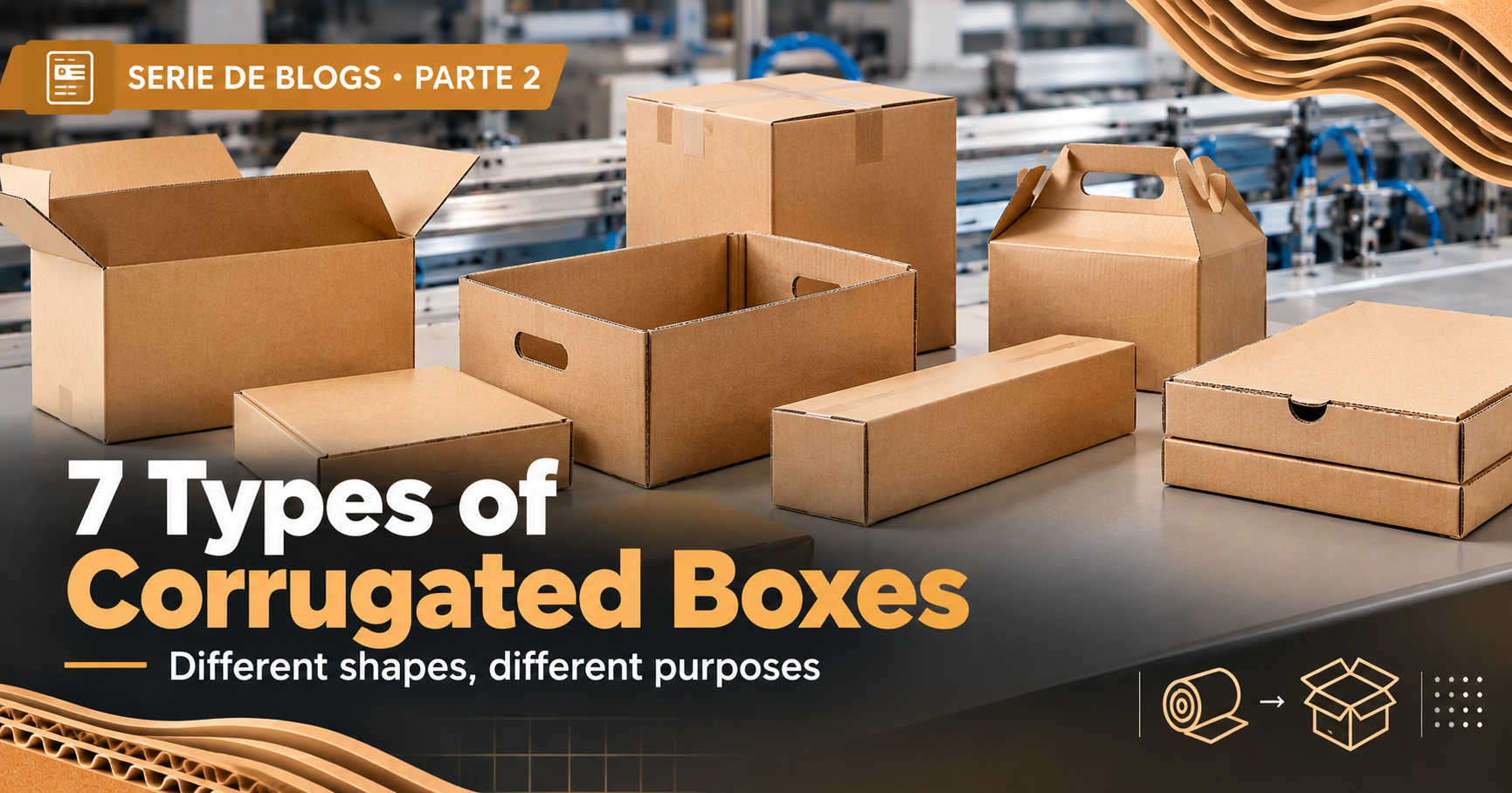
7 Machines You Actually Need to Manufacture Boxes (And Why Skipping One Wrecks Your Margins)
Discover the essential machines needed to manufacture boxes, from flexo printer-slotters to die-cutters, and learn how to sequence your equipment investment for maximum margin.
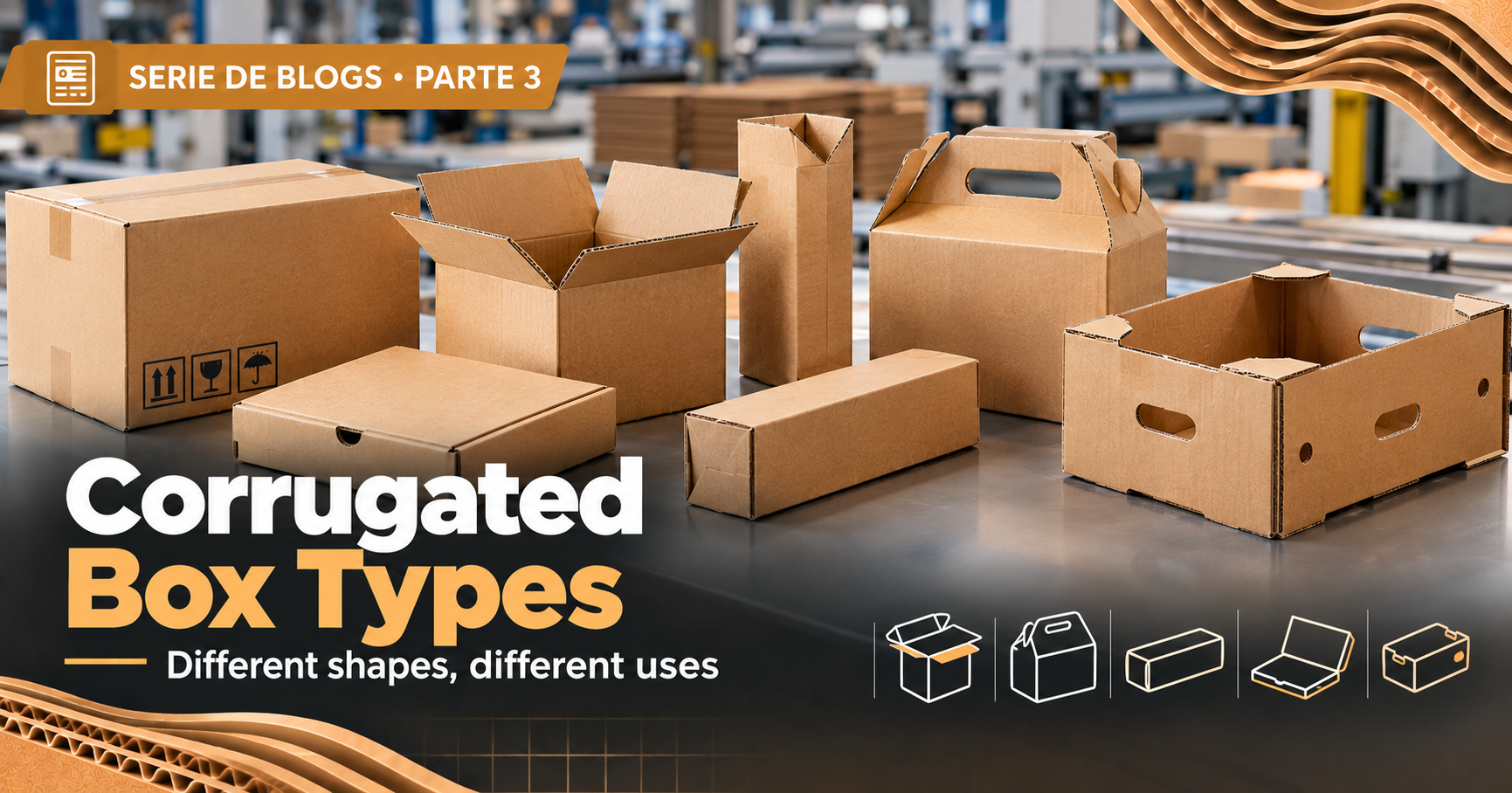
Corrugated Box Types: A Complete Guide to Every Style (2026)
A comprehensive, expert guide to the six most common corrugated box types — RSC, FOL, HSC, die-cut, telescoping, and five-panel folders. Compare costs, FEFCO codes, strength ratings, and best-use applications to choose the right packaging for your products.
Cardboard Box Die Cutter Problems: 10 Common Issues and Practical Fixes
A working checklist of the 10 most common cardboard box die cutter problems — uneven cuts, misalignment, crushed flutes, burrs, poor creasing, and more — with practical fixes experienced production teams use to prevent them.