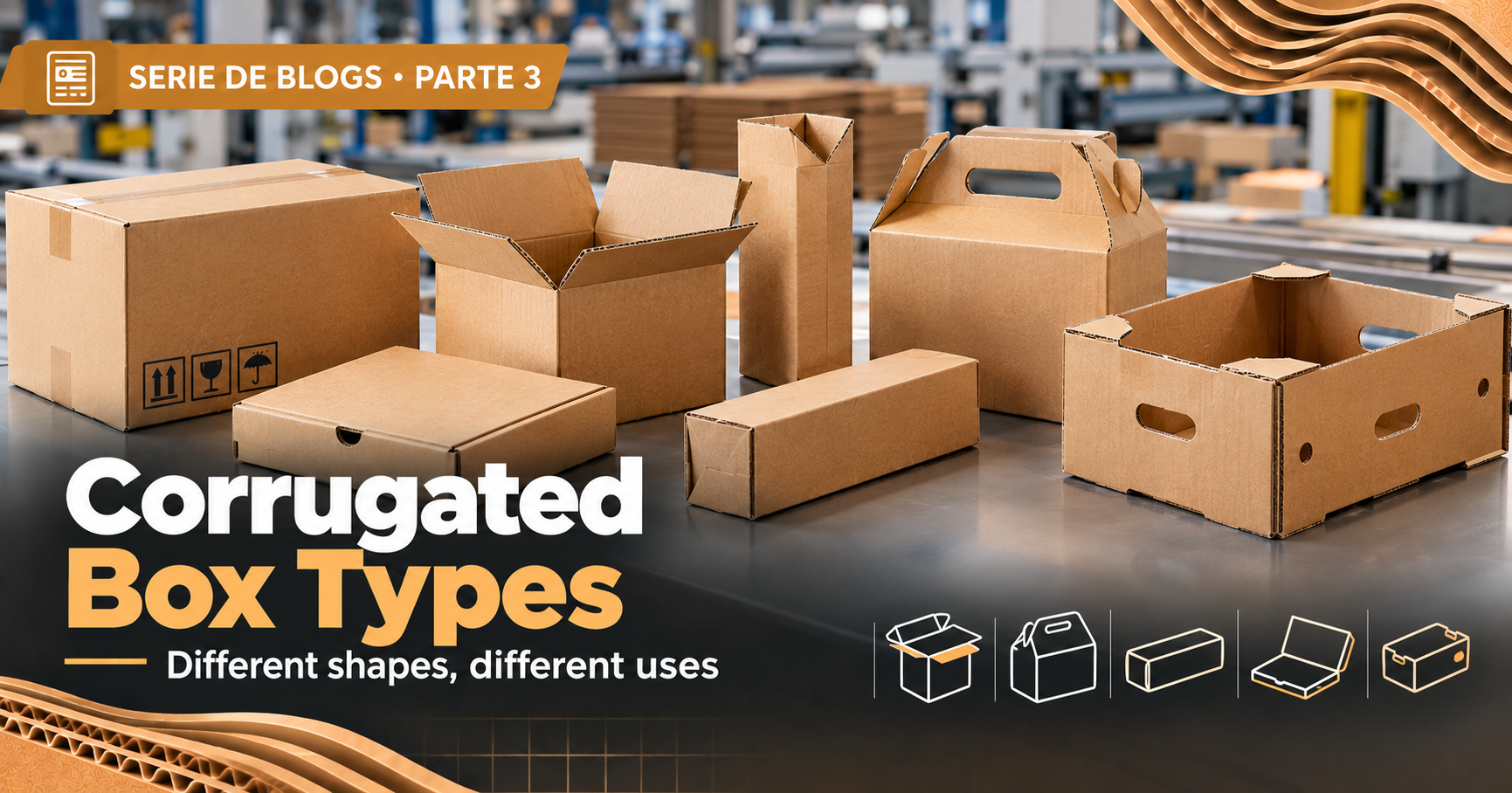
Corrugated Box Types: A Complete Guide to Every Style (2026)
Corrugated boxes are the backbone of global logistics, protecting products through every stage of the supply chain — from factory floor to end-consumer doorstep. But not all corrugated boxes are created equal. Each standardized style is engineered for specific shipping, storage, and retail applications, and choosing the wrong type can mean higher costs, damaged goods, or inefficient warehouse operations.
This guide covers the six most common corrugated box types used in modern packaging. For each style, you'll find construction details, cost comparisons, FEFCO codes, strength characteristics, and clear recommendations on when to use it. Whether you're an e-commerce brand optimizing shipping costs or a manufacturer sourcing industrial packaging, this guide will help you make an informed decision.
Need corrugated box machinery?
Boson Tera Pack manufactures production lines, flexo printers, and die cutters for every box style in this guide.
Request a Free Quote →1. Regular Slotted Container (RSC)
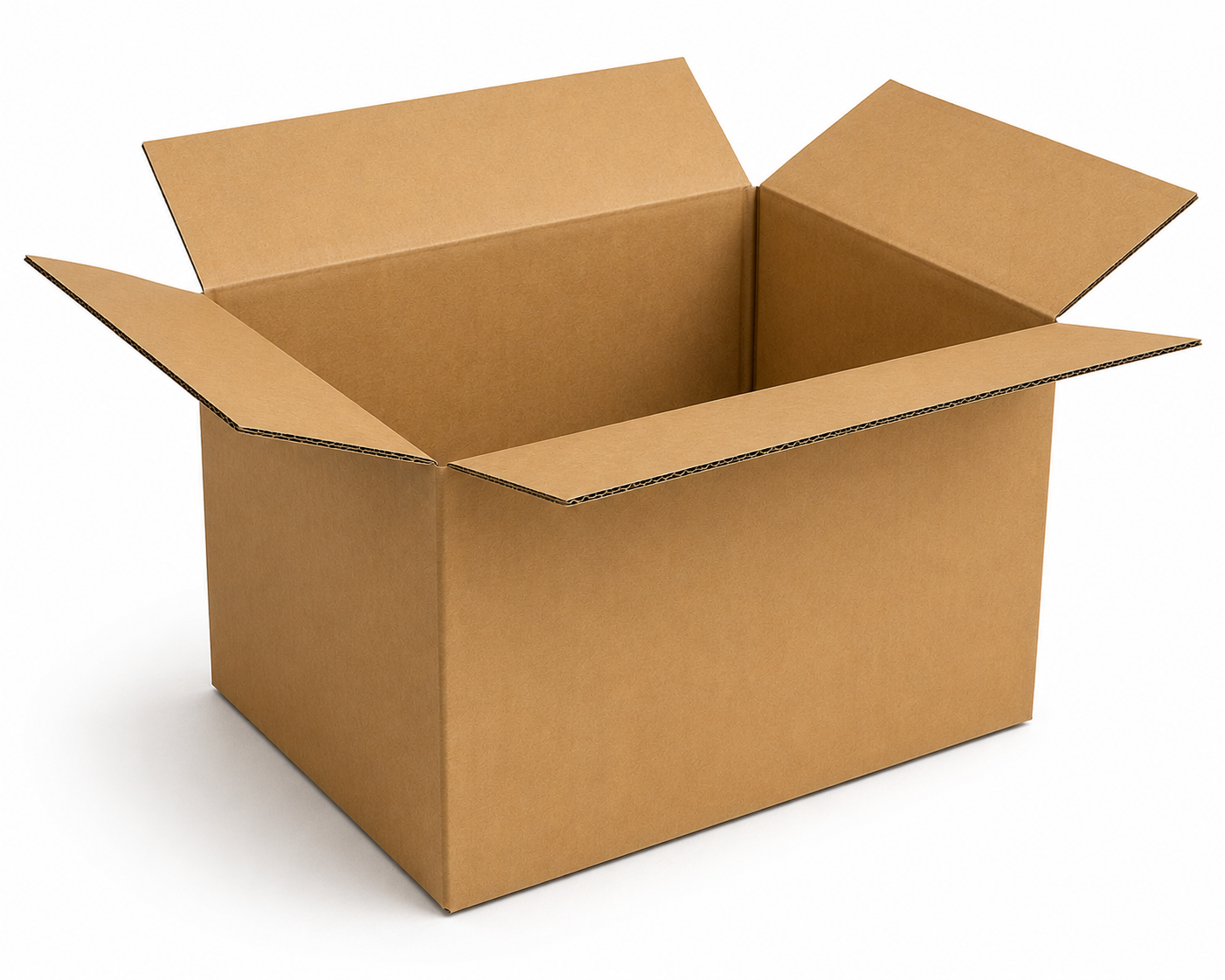
The Regular Slotted Container (RSC) is the most widely used corrugated box style in the world, accounting for over 80% of all corrugated boxes manufactured globally. Its simple, efficient design makes it the industry standard for shipping and storage across virtually every sector.
- Construction: A single corrugated blank is scored and folded into four sides. All four flaps on the top and bottom meet at the center when closed, creating a symmetrical box.
- Cost: The most affordable option — RSC produces minimal manufacturing waste because the blank uses nearly the full sheet of corrugated board with no excess.
- Closure: Requires tape or glue on both the top and bottom flaps to seal.
- Best for: General shipping, e-commerce fulfillment, warehousing, moving boxes, and any application where a standard rectangular box is sufficient.
- Limitations: Because the flaps only meet at the center (they don't overlap), the top and bottom surfaces have only moderate stacking strength compared to full-overlap designs.
- FEFCO Code: 0201 (the international standard code for RSC boxes)
When to choose RSC: If you need a standard shipping box with no special requirements, the RSC is always the default choice. It is the cheapest to produce, fastest to set up on automated packing lines, and universally compatible with existing logistics infrastructure. For most businesses, the RSC covers 80–90% of packaging needs.
2. Full Overlap Container (FOL)
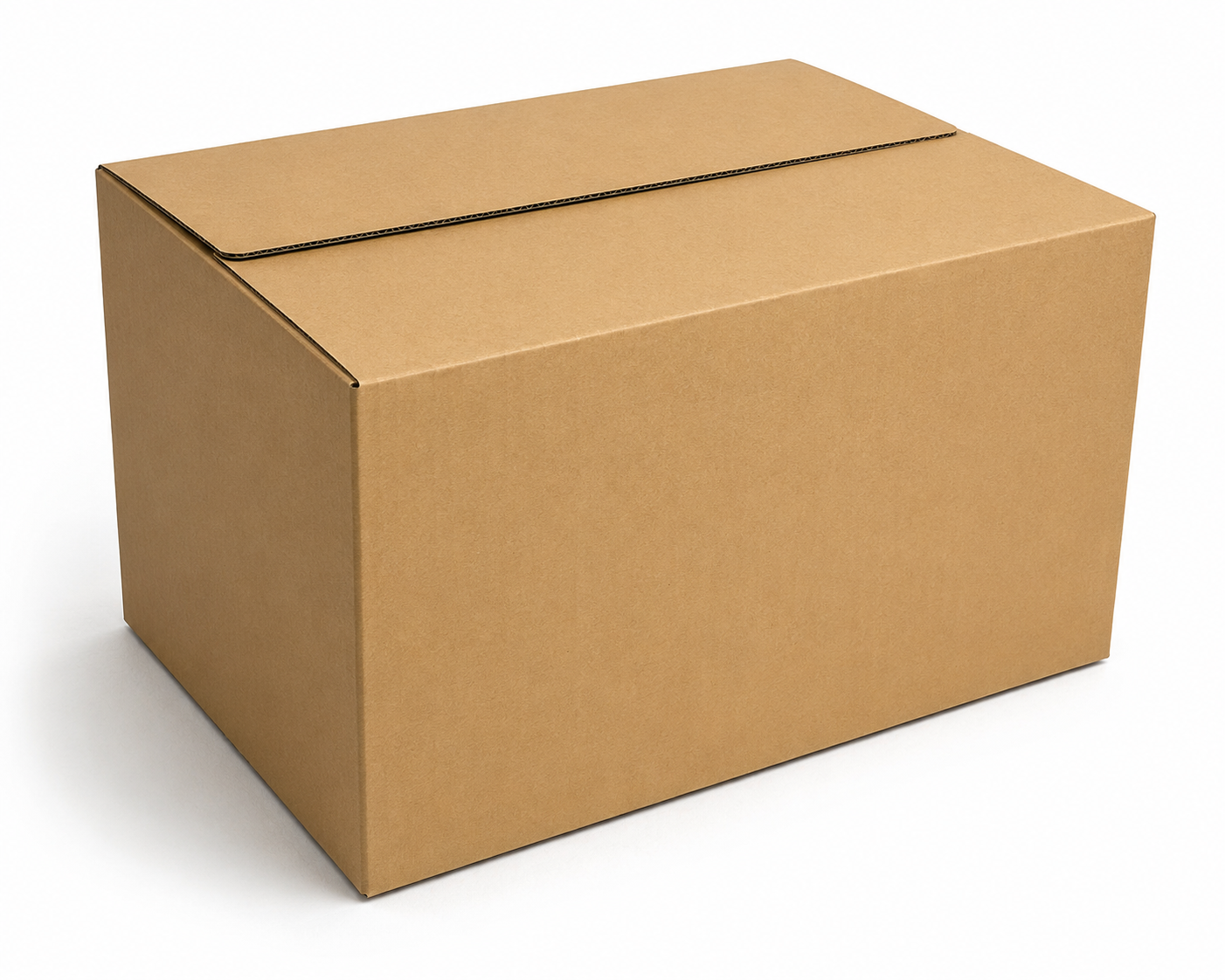
The Full Overlap Container (FOL) is built like an RSC but with extended outer flaps that overlap completely across the top and bottom of the box. This creates a double-layer corrugated surface on both ends, significantly increasing stacking strength and crush resistance.
- Construction: Same four-panel body as the RSC, but the outer flaps are extended to fully overlap rather than just meeting at the center.
- Cost: Approximately 15–20% more expensive than an RSC due to the additional corrugated material required for the extended flaps.
- Closure: Tape or staples; the full overlap itself provides added structural security even before sealing.
- Best for: Heavy items (40+ lbs), fragile goods, products shipped via LTL (less-than-truckload) freight with rough handling, and any application requiring extra top-and-bottom stacking strength.
- Limitations: Uses more material than an RSC, making the box slightly heavier and more expensive per unit.
- FEFCO Code: 0203
When to choose FOL: Choose the Full Overlap Container when your products weigh over 40 pounds, when shipments will go through rough LTL freight handling, or when boxes will be stacked high in a warehouse and need maximum crush resistance on the top and bottom surfaces.
3. Half Slotted Container (HSC)
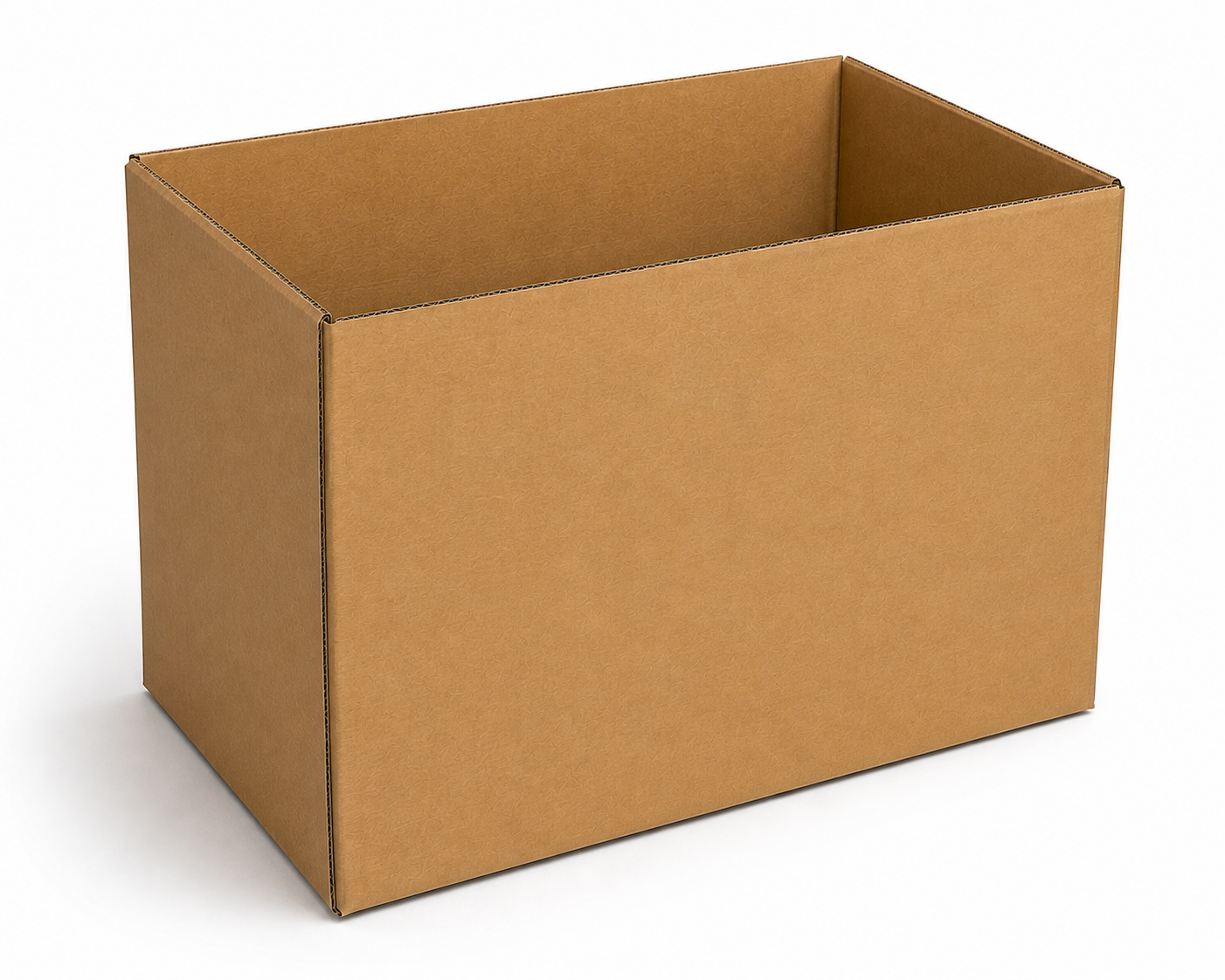
The Half Slotted Container (HSC) is essentially an RSC with one set of flaps removed — typically the top flaps — creating an open-top box. It's commonly paired with a separate lid or used open in display and storage applications.
- Construction: Four side panels with flaps on the bottom only; the top is fully open.
- Cost: 5–10% cheaper than an RSC because it uses less corrugated material (no top flaps).
- Closure: Typically used with a separate telescoping lid, or left open depending on the application.
- Best for: Retail display bins, warehouse picking trays, produce bins, reusable transport containers, and any application where the top of the box must remain accessible.
- Limitations: Requires a separate lid for closed shipping; not suitable for stacking without a lid because the open top offers no structural support.
- FEFCO Code: 0200
When to choose HSC: The Half Slotted Container is ideal for retail display bins where customers need to reach in, warehouse picking trays for order fulfillment, or any scenario where the contents need to remain visible and accessible from the top.
💡 Pro Tip: Matching Box Type to Machine
HSC boxes require a flexo printer slotter that can skip the top-flap slotting station. Our BS-ST Flexo Printer Slotter supports configurable slotting for RSC, HSC, and FOL production on a single line. Ask our engineers →
4. Die-Cut Custom Boxes
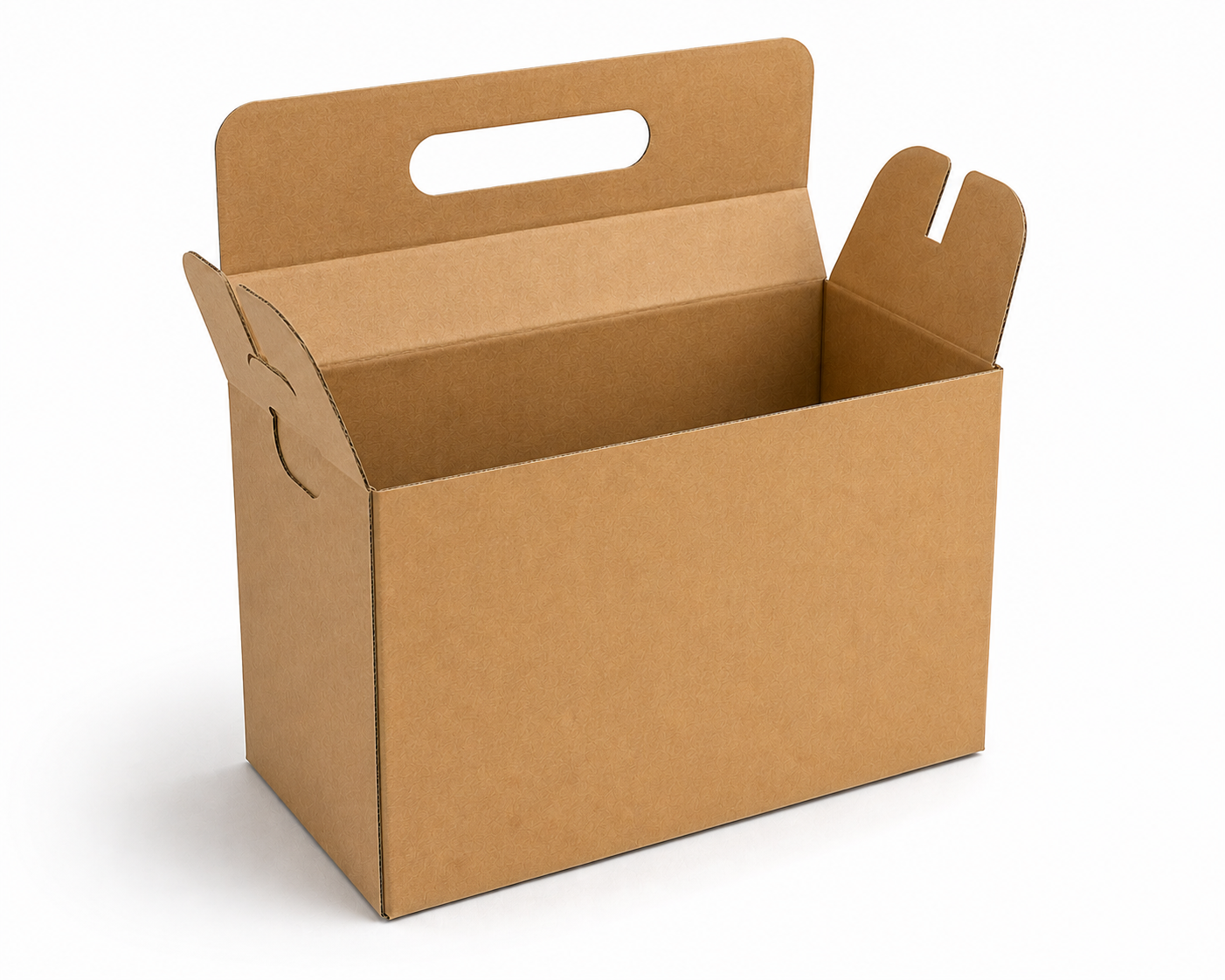
Die-cut boxes are manufactured using a custom steel-rule die that cuts the corrugated blank into precise, non-standard shapes. This allows for integrated tabs, slots, locking mechanisms, handles, and display windows — features impossible with standard slotted designs.
- Construction: A custom die cuts the corrugated blank into any desired shape. Features may include auto-lock bottoms, tuck-top flaps, self-locking tabs, carrying handles, or die-cut display windows.
- Cost: 25–50% more than an RSC. Die tooling costs $150–$400 per design, plus a per-unit premium for the custom cutting process.
- Closure: Self-locking tabs, tuck flaps, or hot-melt glue — many die-cut designs require no tape at all.
- Best for: Retail-ready packaging, subscription boxes, e-commerce mailers, products requiring custom internal inserts or dividers, and any box that doubles as a display unit.
- Limitations: Higher upfront tooling cost; longer lead times for new designs; not cost-effective for standard bulk shipping where an RSC would suffice.
- FEFCO Code: Various (depends on the specific die-cut design)
When to choose die-cut: Die-cut boxes are the right choice when your packaging needs to serve as retail display, when you need built-in inserts or dividers to hold products securely, when you want a self-locking design that requires no tape, or when the box shape itself is part of the brand experience.
5. Telescoping Boxes
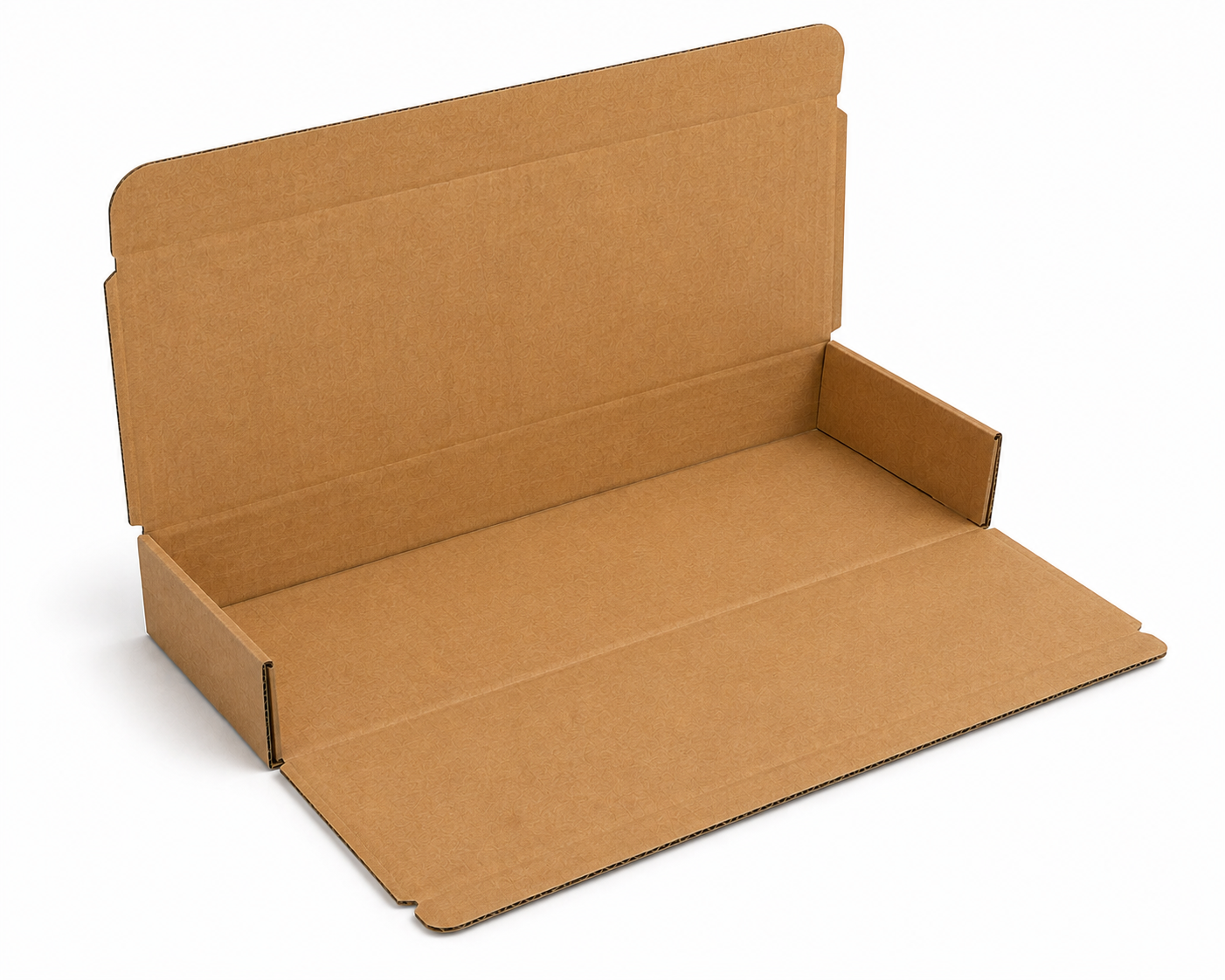
Telescoping boxes are a two-piece corrugated design where a separate lid slides over a base, similar to a gift box or shoe box construction but made from corrugated board for industrial strength.
- Construction: Two separate pieces — a bottom (base) tray and a top (lid) that fits over it with a friction or telescoping fit.
- Cost: 20–30% more than an RSC because two separate pieces must be manufactured, cut, and assembled.
- Closure: Friction fit between the lid and base; no tape required for a secure closure.
- Best for: Flat items (artwork, mirrors, framed prints), heavy items requiring top-loading access, premium presentation packaging, and products where a two-piece unboxing experience adds value.
- Limitations: Two separate pieces to track and assemble; higher material cost; not as space-efficient for palletized shipping.
When to choose telescoping: Telescoping boxes are ideal for artwork, mirrors, heavy equipment that must be loaded from the top, or any application where a premium two-piece corrugated presentation elevates the unboxing experience.
6. Five-Panel Folder
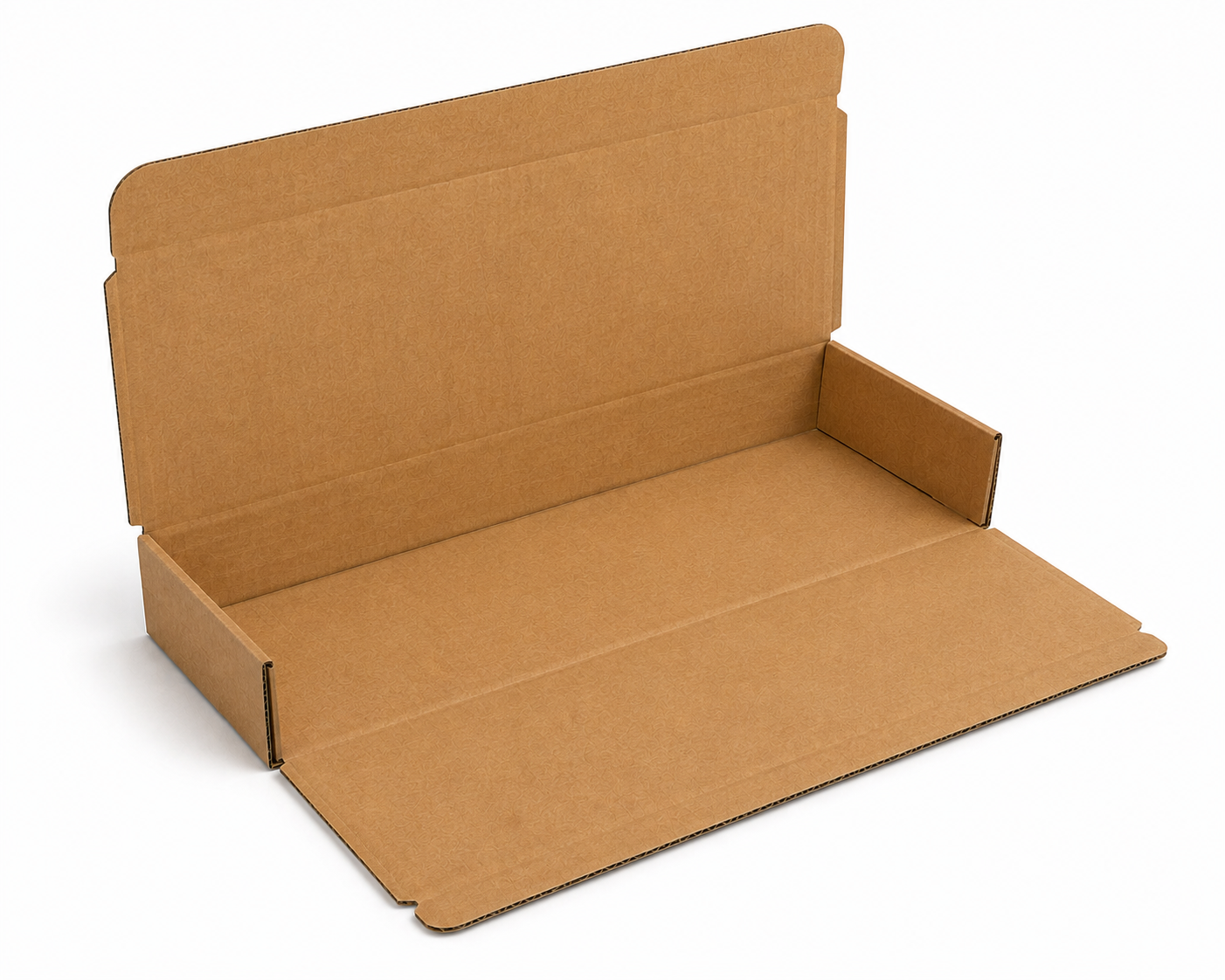
The Five-Panel Folder is a single-piece corrugated wrap designed specifically for long, narrow, or flat items that don't fit the proportions of a standard box. Five panels fold around the product, with the fifth panel creating a double-layer reinforcing side.
- Construction: A single corrugated blank with five panels that fold around the product. The fifth panel overlaps to create a double-layer wall on one side for added protection.
- Cost: Similar to an RSC for the amount of material used, though the design is specialized for non-standard shapes.
- Closure: Tape or staples along the seams.
- Best for: Long items (fishing rods, curtain rods, metal pipes, golf clubs), flat items (signs, panels, sheet materials), and any product with an elongated profile.
- Limitations: Not suitable for heavy or cube-shaped products; designed specifically for long and flat geometries.
When to choose Five-Panel Folder: When your product is long, narrow, or flat and doesn't fit standard box proportions, the Five-Panel Folder provides a custom-like wrap without the cost of die-cut tooling.
Cost Comparison Table
Use this comparison to quickly evaluate the trade-offs between each corrugated box style. Cost figures are relative to the RSC baseline, and minimum order quantities (MOQs) reflect typical manufacturer requirements.
| Box Style | Cost vs RSC | Typical MOQ | Best Application |
|---|---|---|---|
| RSC (FEFCO 0201) | Baseline | 500 units | Standard shipping, e-commerce, general use |
| FOL (FEFCO 0203) | +15–20% | 500 units | Heavy items (40+ lbs), fragile goods, LTL freight |
| HSC (FEFCO 0200) | −5–10% | 500 units | Retail displays, open bins, picking trays |
| Die-Cut | +25–50% | 500 units | Retail packaging, subscription boxes, custom inserts |
| Telescoping | +20–30% | 1,000 units | Flat items, heavy top-loaded items, premium packaging |
| Five-Panel | ~Same | 1,000 units | Long, narrow, or flat items |
Compare box styles against your production capacity
Not sure which box types your machinery can handle? Our engineering team will audit your line and recommend the right upgrades for RSC, FOL, HSC, and die-cut production.
Book a Free Consultation →Frequently Asked Questions
What is the most common corrugated box type?
The Regular Slotted Container (RSC) is by far the most common corrugated box type, representing over 80% of all corrugated boxes produced worldwide. Its cost efficiency, simple assembly, and universal compatibility with automated packing lines make it the default choice for most shipping and storage applications. The RSC corresponds to FEFCO code 0201.
What is the strongest corrugated box type?
For single-wall corrugated board, the Full Overlap Container (FOL) is the strongest standard style because its fully overlapping flaps create a double-layer top and bottom, significantly increasing stacking and crush resistance. For maximum strength overall, choose double-wall corrugated in any style — double-wall board provides 40–60% more crush resistance than single-wall.
What is the difference between RSC and FOL boxes?
The key difference is in the flaps: an RSC's flaps meet at the center of the box, while an FOL's flaps fully overlap across the entire top and bottom. This overlap gives the FOL double-layer protection on both ends, making it stronger and better suited for heavy items — but it costs 15–20% more due to the extra material.
What does FEFCO code mean for corrugated boxes?
FEFCO codes are an internationally standardized numbering system developed by the European Federation of Corrugated Board Manufacturers. Each code identifies a specific box style by its construction. For example, 0201 is the RSC, 0203 is the FOL, and 0200 is the HSC. These codes ensure consistent communication between buyers and manufacturers worldwide.
Can I mix different box types in a single order?
Yes. Most corrugated box manufacturers can produce multiple box styles in a single production run. Many brands use RSC boxes for standard shipping and die-cut or telescoping boxes for retail or premium product lines. Discuss your full packaging needs with your supplier to optimize tooling and material usage across all styles.
Which corrugated box type is cheapest?
The Half Slotted Container (HSC) is technically the cheapest because it uses less material (no top flaps), costing 5–10% less than an RSC. However, the RSC is the most cost-effective choice for general shipping because it provides a fully enclosed box at the lowest practical price point. The HSC's savings only apply when an open-top box is acceptable for your application.
What box type should I use for heavy products?
For products weighing 40 pounds or more, the Full Overlap Container (FOL) is the recommended choice. Its double-layer top and bottom provide the stacking strength and crush resistance needed for heavy items, especially when shipped via LTL freight with rough handling. For extremely heavy or high-value items, consider double-wall FOL construction.
How to Choose the Right Corrugated Box Type
Choosing the right corrugated box comes down to three factors: product weight, shipping conditions, and budget. Here's a quick decision framework:
- Standard shipping (under 40 lbs): Choose RSC — it's the cheapest, most versatile, and works with automated packing lines.
- Heavy or fragile items (40+ lbs): Choose FOL — the double-layer overlap provides the extra strength you need.
- Retail display or open-top access: Choose HSC — open-top design with optional lid for flexibility.
- Custom shapes or retail-ready packaging: Choose die-cut — self-locking tabs, custom shapes, and premium presentation.
- Flat or top-loaded items: Choose telescoping — two-piece design for easy top loading and premium unboxing.
- Long, narrow, or flat products: Choose Five-Panel Folder — wraps around elongated items without custom tooling.
Ready to upgrade your corrugated box production?
From RSC to die-cut — we build the machinery that makes every box style in this guide. Get a tailored quote in 24 hours.
At Boson Tera Pack, we manufacture the machinery that produces these corrugated box types at industrial scale. Our corrugated cardboard production lines, flexo printer slotter die cutters, and folder gluer machines are built to handle every box style from RSC to custom die-cut designs. Request a quote and our engineering team will help you select the right machinery for your production needs.
Related Articles
How Corrugated Cardboard Is Made: From Kraft Paper to Finished Box
Learn how corrugated cardboard is made step by step — from kraft paper and fluting to corrugation, printing, and the finished box. Part 1 of our box manufacturing series.
7 Machines You Actually Need to Manufacture Boxes (And Why Skipping One Wrecks Your Margins)
Discover the essential machines needed to manufacture boxes, from flexo printer-slotters to die-cutters, and learn how to sequence your equipment investment for maximum margin.
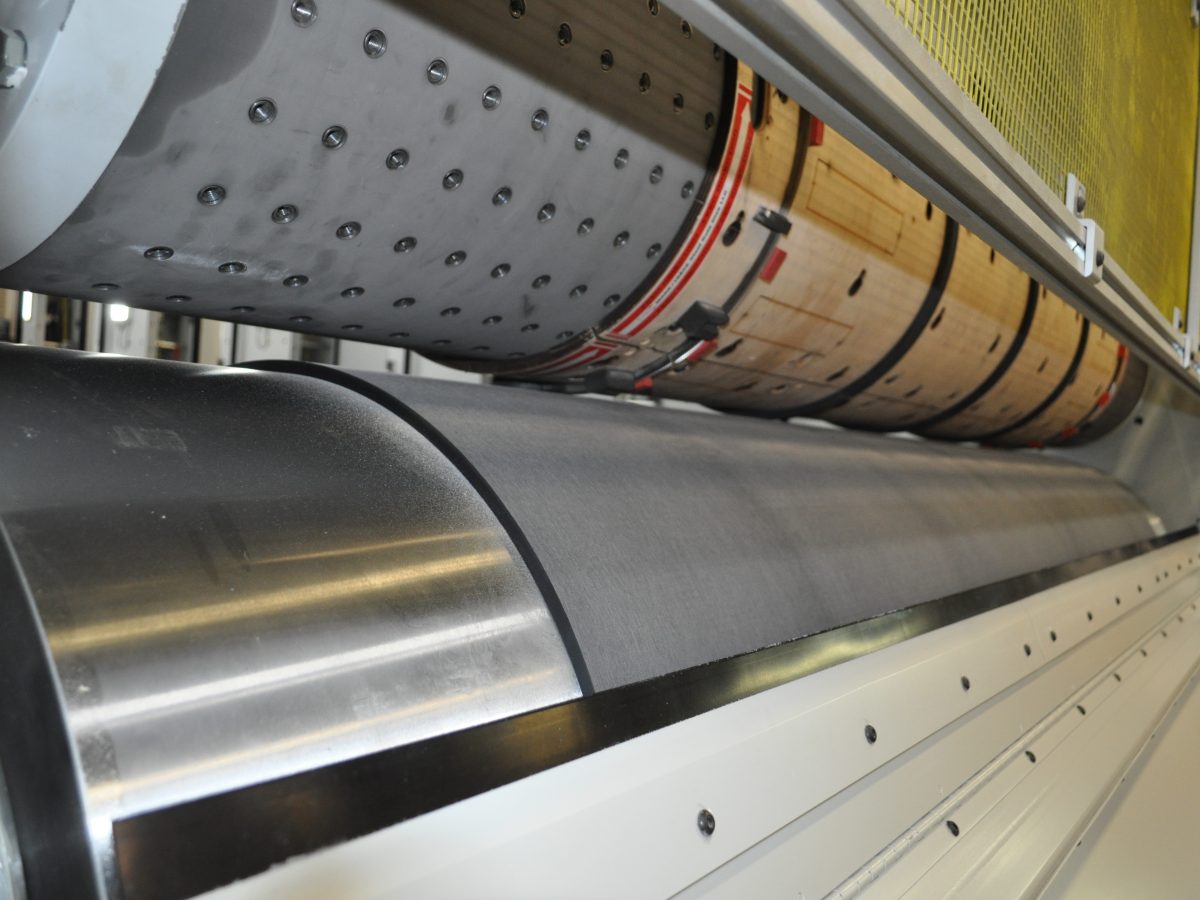
Cardboard Box Die Cutter Problems: 10 Common Issues and Practical Fixes
A working checklist of the 10 most common cardboard box die cutter problems — uneven cuts, misalignment, crushed flutes, burrs, poor creasing, and more — with practical fixes experienced production teams use to prevent them.